The Same Stool, Every Morning
Anyone who has worked a counter for a few years learns it early: regulars pick a seat on their second visit and defend it for years.
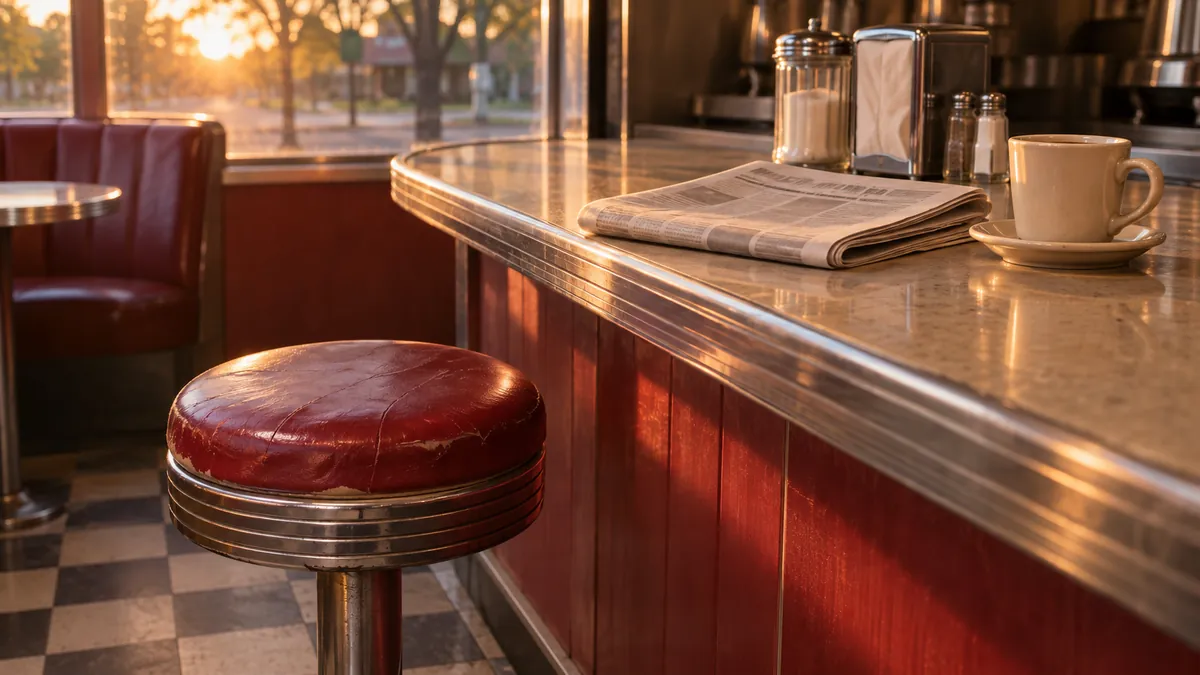
What the counter sees
At a corner snack bar the morning comes in waves. First the people on their way to work, who stand and do not sit. Then, a little later, the ones who no longer have to be anywhere at eight, and who walk in at nearly the same minute every day and head for the same stool without looking. If somebody else is sitting there, they hesitate, and you can watch them recalculate the whole morning.
That hesitation is the interesting part. A fixed seat is not a whim. It is a small decision made once so that it never has to be made again. The person arriving does not spend attention on where to sit, how to face the room, where to put the hat or the bag. All of that runs on rails. The attention that is left over goes to the conversation, the paper, the coffee, the people walking past the window.
Why an anchor helps
People who study habit describe something similar in more careful language. When a behavior is tied to a stable place and a stable time, it takes less effort to repeat, and the mind is freer for whatever else the hour brings. Researchers who look at routine in later life have noted that a predictable daily structure tends to go along with steadier focus, better sleep timing and an easier time keeping track of appointments. None of that is a promise, and nobody at a snack bar would put it that way, but the pattern is easy to recognize from behind the register.
There is also a quieter benefit. A regular seat is a landmark. When the day is anchored to one known point, the hours that follow line up behind it. The person who always sits down at nine fifteen tends to know, without checking, that the pharmacy run is at eleven and the call to a sister happens after lunch. The stool is the first domino.
Building your own stool at home
You do not need a snack bar for this. Pick one chair in the house and give it one job in the morning. Something like this works well for many readers:
- The same chair, facing the same way, at roughly the same hour after you get up.
- One thing that always happens there: the first cup of coffee or tea, a look at the calendar, a few lines in a notebook about what the day holds.
- A small tray or bowl next to it where the glasses, the pen and the day's list live, so nothing has to be hunted for.
- No phone for the first ten minutes, if you can manage it, so the hour belongs to you before it belongs to anyone else.
Keep it boring. The value comes from repetition, not novelty. After two or three weeks the chair starts doing part of the work: you sit, and the plan for the day arrives on its own, the way the order at the counter arrives without anybody saying a word.
When the seat is taken
Life will move the stool sometimes. Travel, a visit from the grandchildren, a doctor's appointment at an odd hour. The counter teaches a useful lesson here too. Regulars who find their seat taken do not abandon the morning; they sit one stool over and keep the rest of the ritual intact. Keep the order of the steps even when the place changes. Coffee, calendar, notebook, then the day. The sequence is the anchor as much as the chair is.
It also helps to notice when the anchor slips for days in a row. If the morning seat has gone empty for a week, that is worth a gentle look, not a scolding. Often it only means the routine needs a smaller first step, such as just sitting down for two minutes before doing anything else.